Built to disappear
The best technology doesn't announce itself. After twenty years in coffee, the hardest thing we engineered was a café you stop noticing — and a cup you never stop trusting.
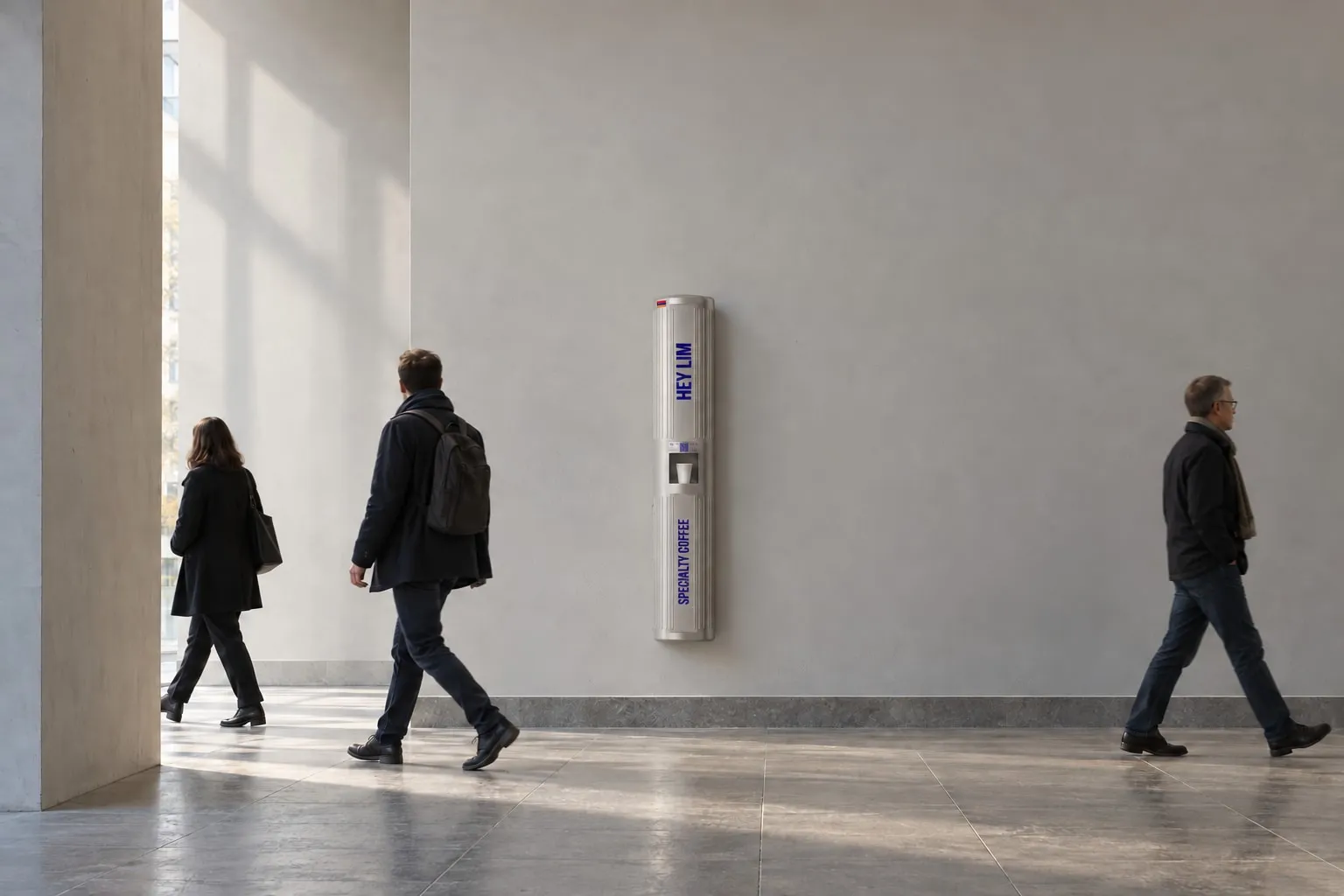
For twenty years we built coffee the loud way: bars, baristas, machines that hiss and gleam, the theatre of the pour. We loved it. We also learned its limit — great coffee that only happens when the right person is standing in the right place on the right day.
So we asked an uncomfortable question. What if the best version of the café was one you barely noticed?
Invisible complexity
A HEYLIM point looks almost boring on purpose. A clean pillar on a wall. A code to scan. Thirty seconds. A cup.
Behind that calm is the part we actually spent two decades on: dialling extraction the way a master would, then doing it identically the ten-thousandth time — temperature, dose, flow, timing, held to a standard that doesn’t drift because it’s tired, busy, or new. The skill didn’t vanish. It moved inside, where you can’t see it and don’t have to think about it.
The ritual is the product
People don’t want to operate coffee. They want it to be there — reliably, quietly, woven into a morning without negotiation. The highest compliment our machines get is no compliment at all: someone taps, collects, and walks on, already thinking about something else.
That’s the goal. Not a gadget you admire, but a ritual that becomes invisible because it never lets you down. Rare, hand-picked coffee, everywhere, every day — and the cleverness that makes it possible, deliberately out of sight.
Good technology earns attention once. Then it spends the rest of its life giving that attention back.